Why Cajun Food Feels Personal
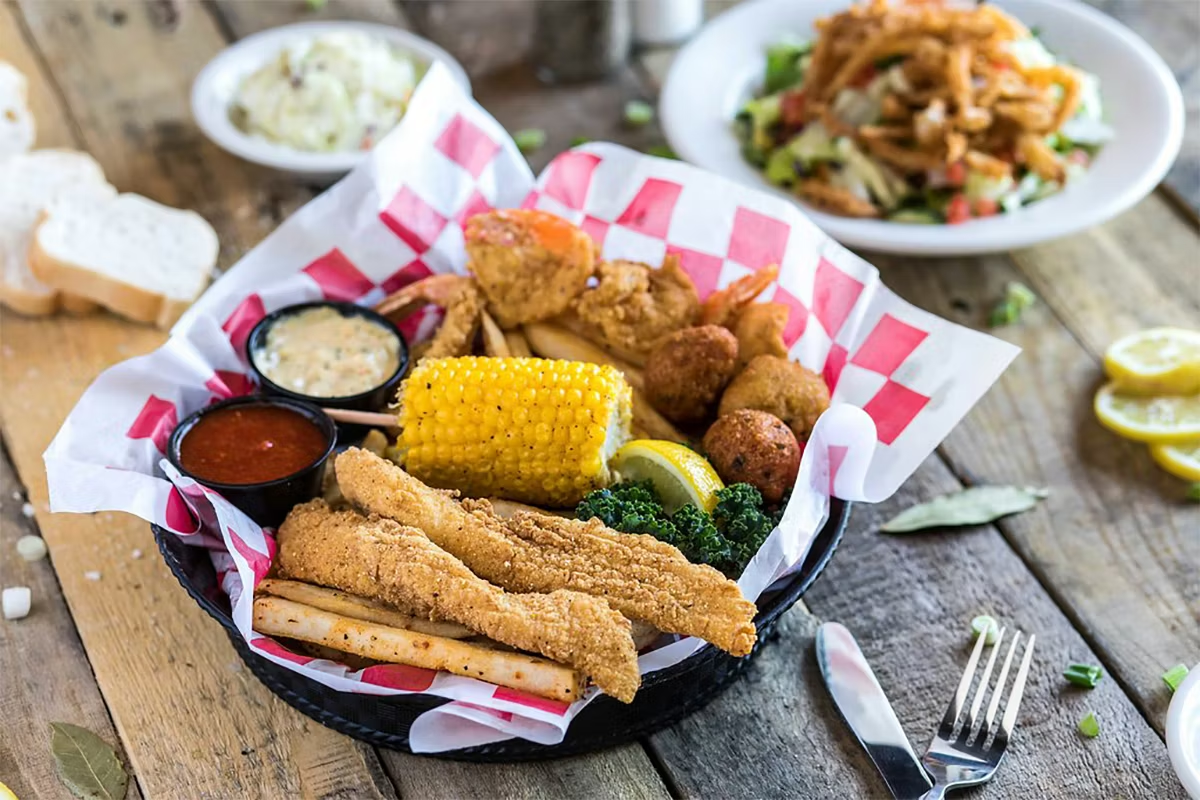
When you sit down to Cajun food, it rarely reads like a recipe and more often arrives as a lived memory; you taste hands, seasons, and stories in each bite. The ingredients in Cajun cuisine are deeply local, and the measurements often feel like gestures passed down through generations. Elders teach the rhythms of seafood boils and roux by scent and touch, and that familiarity grows from history, thrift, and communal rituals. A single spoonful of gumbo or jambalaya can tug at belonging because there is so much woven behind that bowl, and places like Razzoo’s Cajun Cafe carry some of those flavors forward.
How Cajun History Shaped Cajun Food
Because the Acadians were uprooted, hungry, and resourceful, they turned what they’d into Cajun food that’s both practical and soulful. You can see how displacement taught them to wring flavor from few ingredients while preserving techniques and improvising with local game, seafood, and garden staples.
When you taste a slow-cooked roux or smoky smoked meat at a Cajun restaurant or in a home kitchen, you’re tracing choices born of survival: one-pot meals, bold seasoning, and communal cooking that fed families and built identity. Lineage is felt in rituals such as Sunday gatherings, potlucks, and celebrations, where recipes passed down by word and hand keep memory alive. That history makes each bite intimate, because Cajun cuisine isn’t just food but a carried story you can taste.
Cajun Ingredients That Make Dishes Feel Familiar
You can often recognize Cajun food before you taste it by the scent of dark roux, the kick of cayenne, and the bright lift of chopped green onions and bell pepper. Cajun cuisine offers deep flavors from simple staples, and roux gives dishes body while file powder adds an earthy warmth.
Broth, usually chicken or seafood, carries and unifies the other elements. Smoked sausages and tasso lend savory, spiced fat, and rice and cornmeal ground the plate with comforting starches.
Fresh garlic and onions build the backbone of many Cajun restaurant dishes, and herbs like thyme and parsley finish them with subtle green notes. These ingredients stack in familiar ways, so each component plays a recognizable role that signals community, practicality, and a lived culinary logic.
How Louisiana Seasons and Place Shape Cajun Flavors
Those familiar Cajun ingredients take on shape and purpose because of Louisiana’s rhythms—its humid summers, floodplain soils, and seasonal harvests.
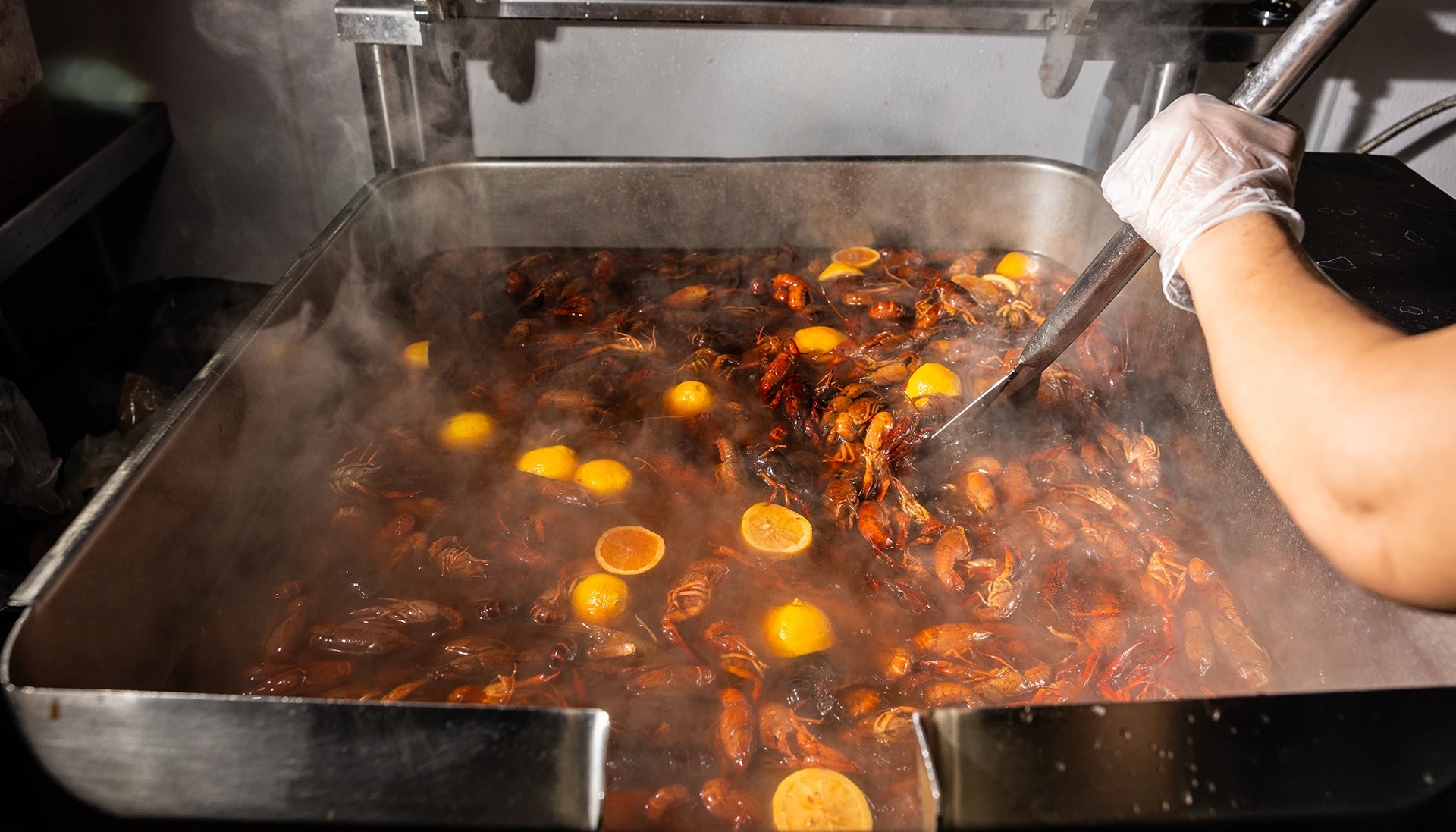
You notice crawfish in spring when rivers swell and fields feed them, and you expect tomatoes and okra in hot months when sunlight sweetens produce.
Salt marshes and brackish bayous season seafood and Cajun cuisine with a minerality you learn to recognize.
When a dry spell follows flooding, you taste concentration in peppers and herbs, and after rains, greens come lush and abundant.
Your pantry adapts with cured, pickled, and smoked provisions to stretch bounty across leaner seasons.
Place dictates technique and urgency, so each bite in a Cajun restaurant carries a calendar and a map, tying flavor to time and terrain.
Roux, Spice, and Slow Cooking: How Flavor Builds Memory
Stirring a dark roux until it smells like caramel and smoke is how Cajun cooking sets a mood you can’t forget.
You learn timing by the color and scent, and patience turns flour and fat into a base that carries memory.
Chefs add spice—cayenne, black pepper, bay leaf—in measured pinches, and each bite echoes a conversation, a Sunday porch, or a child’s first taste.
Slow simmering lets textures relax and flavors marry, making simple ingredients in Cajun cuisine feel like history.
When someone ladles gumbo or étouffée in a Cajun restaurant, aroma reaches across the room and ties people to a moment.
That sensory thread of heat, scent, and mouthfeel anchors stories in the mind so meals become memory rather than just nourishment.
Everyday Thrift: 6 Ways Cajun Cooks Turn Scraps Into Flavor
The same patience you use to coax a dark roux into fragrant life shows up in another Cajun habit: cooks in Cajun cuisine save bones and shrimp shells to simmer a stock that deepens gumbo.
Home kitchens and Cajun restaurants alike keep wilted greens trimmed and sauté them with garlic and pepper flakes for a quick side.
Stale bread is torn into dressing or toasted for crunchy toppings that complement seafood dishes.
Leftover rice becomes a base for a jambalaya-style hash that’s brightened with scallions and hot sauce.
Trimmed trinity vegetables—onion, celery, bell pepper—are frozen in portions for future use.
Citrus rinds are used to flavor vinegar or oil, and these six moves turn scraps into intentional flavor while cutting waste and making everyday Cajun cooking feel resourceful and personal.
Family Gatherings and the Rituals Behind Signature Dishes
When you walk into a Cajun family gathering, you don’t just smell food; you step into rituals that shape each signature dish, from the measured patience of a Sunday gumbo to the loud, laughing rhythm of a crawfish boil. Elders check roux color by sight and memory and pass techniques for Cajun cuisine without written recipes.
Family members peel, stir, season, and taste in unison, and timing and touch matter more than measurements in their seafood preparations. Children learn by imitation, discovering which pot to tend and when to shout “Laissez les bons temps rouler!” without any explanation.
Dishes mark occasions, with a slow-cooked jambalaya accompanying a harvest and an iced shrimp platter appearing on hot afternoons. These rituals bind people to place and to one another, making every bite of Cajun food a shared history.
Language, Nicknames, and the Talk Around the Table
Move from the kitchen to the chairs, and you’ll hear as much flavor in the talk as in the gumbo; Cajun gatherings brim with a living vocabulary of French phrases, Creole turns of speech, and playful nicknames that tell family stories faster than any photograph.
You pick up words like cher, fais-do-do, and lagniappe, and each term carries warmth, history, and a wink.
You learn who’s called T-Bone or Mémère not merely as labels but as roles within the household: the storyteller, the peacemaker, and the one who seasons the jambalaya boldly.
Conversation in a Cajun restaurant or around a seafood boil folds recipes into gossip, folds jokes into gentle corrections, and folds memories into instruction.
You leave knowing the language shaped the Cajun cuisine and that the Cajun cuisine shaped the language, with both keeping kinship vivid and immediate.
Oral Recipe Traditions: How Cajun Dishes Are Passed Down
Hearing a recipe in a Cajun kitchen means listening as much as watching, because elders narrate proportions in stories and correct a grandchild’s pinch or a simmer as they cook.
You learn by repeating their cadence and gestures, and you pick up cues such as a tossed handful of filé or the scent that signals a roux is ready rather than relying on measurements.
Instructions arrive as memory cues—phrases like "when it smells like caramel, stop" or "add okra until it hugs the pot"—and you mimic timing, tone, and the small improvisations that were passed down when ingredients were scarce.
This oral transfer keeps Cajun dishes flexible and personal, so everyone adapts recipes to taste and preserves the lineage of Cajun cuisine and seafood traditions through practice rather than printed pages.
Cajun Community Cooking Events and How They Keep Identity Alive
Gathering around a steaming pot at a community cookout, people do more than share food; they reinforce a shared identity. They measure ingredients by memory, laugh over stories tied to each spice, and watch elders guide younger hands through stirring, seasoning, and timing.
These events turn Cajun food and recipes into communal practice, with everyone contributing and learning so techniques survive beyond written pages. Participants feel belonging as they chop, simmer, and plate, with roles circulating, voices rising, and the local language threading through instructions and jokes.
Festivals, church suppers, and backyard fais do more than feed; they validate history, settle disputes about the right way, and adapt aspects of Cajun cuisine and seafood traditions to new members. Through participation, people carry Cajun culture forward in ways that are both embodied and edible.
Bring Cajun Home: Practical Ways to Recreate the Personal Feel
At your own table, you can recreate the warm, hands-on Cajun feel by turning cooking into a shared ritual where friends or family chop, season, and taste together. Play local music, pass down a handwritten recipe, and let conversation and jokes guide the timing as much as the clock.
You’ll set a simple mise en place with onions, bell pepper, and celery so that everyone has a task. Using a cast-iron pot and starting with a brown roux helps evoke the deep flavors of Cajun cuisine and seafood stews, and the color of the roux tells part of the story.
Sampling and making small adjustments, such as adding a squeeze of lemon or a pinch more cayenne, keeps the experience interactive and personal. Store leftovers in labeled jars with notes to preserve memories alongside the food.
Finally, tell the dish’s origin as you serve to give the meal the context that makes it feel like home in a cozy Cajun restaurant or at your own table.