Cajun Food That Feeds a Crowd Without Stress
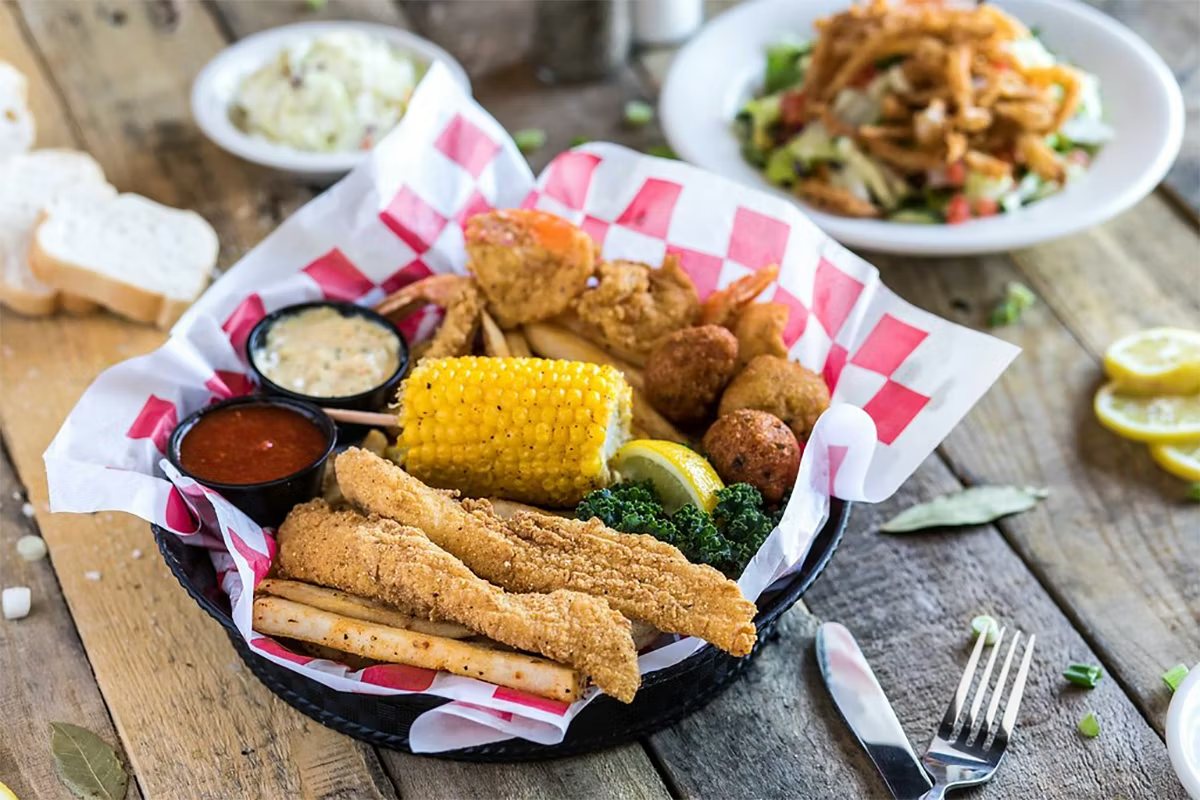
If you’re feeding a crowd, pick Cajun food that does the heavy lifting for you, such as gumbo, jambalaya, red beans and rice, or a sheet‑pan sausage with roasted vegetables. These Cajun cuisine classics scale well, often taste better after resting, and let you finish most of the work ahead of time so you aren’t stuck at the stove. You can rely on the bold flavors of seafood and smoked sausage to make simple preparations feel special. I always think of places like Razzoo’s Cajun Cafe when I want that laid‑back, big‑flavor vibe for a gathering. Keep a few shortcuts and clear serving instructions ready, and you’ll find yourself enjoying the company more than chasing pans.
Quick Menu Plan for Feeding a Crowd (Checklist)
Start by mapping out dishes that balance flavor, prep time, and ease of scaling so you won’t be scrambling at the last minute. Decide on a protein, a starch, two vegetables or sides, an appetizer, and a dessert. Include at least one make-ahead item and one dish that stays warm on a low oven. Estimate portions at roughly 6–8 ounces of protein per adult and about one cup per side, and round up to allow for seconds. Build a shopping list grouped by aisle and plan prep steps by day, specifying what to buy, what to chop, what to marinate, and what to cook the morning of the event. Label containers and note reheating instructions for each dish. Assign simple tasks to helpers such as assembling salads, slicing bread, or arranging plates. Allow time for a quick taste test and final seasoning before serving, and consider incorporating Cajun cuisine or seafood elements if you want bold flavors reminiscent of a Cajun restaurant.
Cajun One-Pot Mains That Scale: Gumbo, Jambalaya, and Red Beans
When you’re feeding a crowd, one-pot Cajun mains such as gumbo, jambalaya, and red beans allow you to lock in big, bold flavors without fuss.
Each of these dishes scales predictably, holds well, and can be mostly hands-off once it’s simmering. You’ll choose gumbo when you want a saucy, ladleable option; make a dark roux, add stock, sausage, and seafood or chicken, and simmer until the flavors meld because it stays hot and often tastes better over time.
Jambalaya is an all-in-one rice dish in which you brown meat, add aromatics and tomatoes for a Creole-style variation, and then cook the rice so it soaks up all the flavor.
Red beans and rice make a slow-simmered, creamy legume main when you cook beans with a ham hock, thyme, and bay and serve the mixture over rice.
These dishes represent the heart of Cajun cuisine and are staples you might find on the menu at a Cajun restaurant or alongside other seafood offerings.
Cajun Sheet-Pan & Oven Dishes for Hands-Off Feeding
Often you toss smoked sausage, shrimp, and hearty vegetables onto a sheet pan and season them boldly with Cajun spices so the oven can do the work while you focus on guests. You choose sturdy vegetables such as potatoes, bell peppers, and onions and then add peeled shrimp or additional sausage near the end so the seafood doesn’t overcook.
You drizzle oil and sprinkle cayenne, paprika, garlic powder, and a touch of thyme before tossing everything until it’s evenly coated. Roasting at high heat caramelizes the edges and concentrates flavors that evoke authentic Cajun cuisine.
When feeding a larger group, you use multiple pans and rotate the racks to ensure even cooking. You finish the dish with chopped parsley and a squeeze of lemon to brighten the flavors.
The result makes for a convivial, rustic presentation that recalls the atmosphere of a lively Cajun restaurant and highlights the best of Cajun food and seafood.
Time-Saving Cajun Shortcuts: Roux, Stock Swaps, and Spice Blends
If you want authentic Cajun flavor without spending hours at the stove, smart shortcuts like a quick dark roux, thoughtful stock swaps, and ready-made spice blends keep Cajun food rich and bold while cutting prep time.
You can make a faster roux by using equal parts oil and flour and gently toasting until it reaches a peanut-butter brown; it won’t be as deep as a traditional dark roux but will add a toasty backbone in minutes.
For busy home cooks or a small Cajun restaurant kitchen, swapping homemade stock for low-sodium store-bought chicken, seafood, or vegetable stock speeds preparation while preserving flavor.
You can boost the depth of store-bought stock with a splash of Worcestershire or soy sauce and with a tied bouquet garni when making seafood stews or gumbo.
Keeping a jar of a balanced Cajun spice blend on hand makes it easy to season stews, rice, and grilled seafood promptly and consistently.
Make-Ahead Components & Mise En Place (What to Prep and When)
Those shortcuts save time on the stove, but planning what to prepare ahead will prevent chaos on service day.
Start by making stocks, roux, and spice blends two to three days ahead, and cool and refrigerate them in labeled containers.
Pre-chopping the “holy trinity” of onion, celery, and bell pepper helps maintain the crispness needed for authentic Cajun cuisine, and storing the vegetables dry prevents sogginess.
Precooking proteins for jambalaya or étouffée—slicing sausages and searing chicken—allows separate storage so they can be combined and finished quickly during service.
Par-cooking rice and cooling it before service makes reheating easier and reduces clumping for Cajun restaurant plates.
Assembling and chilling salads, pickles, and condiments in clear bins provides quick access for assembling seafood and other menu items.
Portioning sauces and gumbo base into measured servings streamlines plating and consistency for Cajun food offerings.
Setting out mise en place the morning of service, with pans, ladles, and timers at each station, ensures the line flows smoothly without hunting for equipment.
Timing & Serving Logistics for Big Groups
When you’re feeding a crowd, timing is everything and you should coordinate prep, cook, and service windows so each dish from the Cajun cuisine lineup arrives at peak quality.
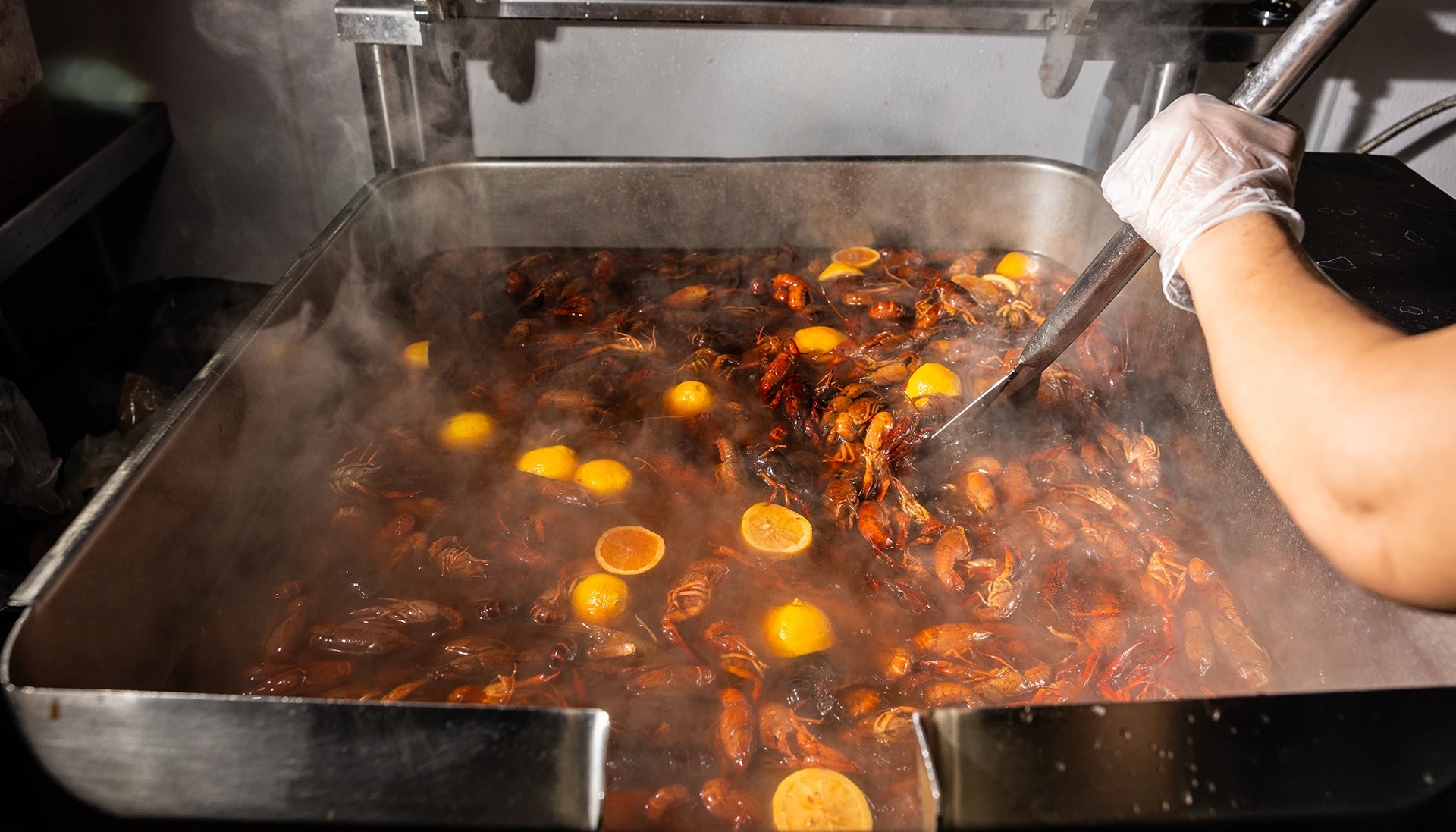
Set a clear service time and work backwards, slotting stove, oven, and resting periods to accommodate both seafood boils and slow-cooked gumbo. Batch long-cooking items earlier and hold them warm on low heat with a splash of stock to prevent drying in a busy Cajun restaurant kitchen.
Stagger finishes so hot items come out every 10 to 15 minutes instead of all at once to maintain consistency across plates. Assign roles so someone monitors temps, another plates, and a third replenishes stations during service.
Use insulated carriers, chafer pans, and warmers to preserve the texture and heat of seafood and Cajun specialties. Label dishes and give servers simple plating guidelines to speed service for large groups.
Run a quick timeline rehearsal to catch conflicts before guests arrive.
Simple Sides, Drinks, and Desserts to Round the Meal
Choose a few straightforward sides, revitalizing drinks, and easy desserts that complement bold Cajun cuisine without stealing the show. Include crowd-pleasing sides like buttery corn, smoky charred cabbage, or a simple potato salad with mustard vinaigrette, and prepare them ahead so they can be reheated or served chilled.
For greens, toss mixed lettuces with a citrus vinaigrette to cut the richness of Cajun food and seafood dishes. Offer refreshing beverages such as iced tea with lemon and mint, spiced lemonade, and a pitcher cocktail like a light rum punch, and clearly label alcoholic and nonalcoholic options at the table.
Finish with uncomplicated desserts like bread pudding made in a sheet pan, beignets dusted with powdered sugar, or a seasonal fruit crisp that can be baked or warmed while guests eat. Keep serving tools and labels visible for easy self-service in a casual Cajun restaurant-style setup.