What Authentic Cajun Food Actually Looks Like
When you see authentic Cajun food, you notice a glossy dark roux coating tender meat or seafood and the Holy Trinity soft and fragrant in the pan. Cajun cuisine often pairs rice or crusty bread with a deep, garlicky sauce that soaks up every last bit. Smoked sausage or cured pork commonly mingles with seasonal seafood or humble chicken, and bay leaf and thyme peek through while cayenne adds a measured bite. If you wander into Razzoo’s Cajun Cafe, you can spot the simple, home-cooked logic that separates true Cajun from imitation.
Quick Checklist : Is This Really Cajun?
If you’re wondering whether a dish is truly Cajun, start by checking three essentials: bold, savory seasoning that often includes garlic, onion, bell pepper, and cayenne; a traditional cooking method such as sautéing, braising, or building a dark roux; and a focus on locally available ingredients like rice, pork, seafood, and smoked sausage.
Cajun cuisine usually presents assertive heat that remains balanced by acidity or fat. Rustic preparation is characteristic of Cajun food, with one-pot cooking, slow simmering, or high-heat searing that concentrates flavors.
Simplicity defines many Cajun restaurant dishes because the cuisine emphasizes technique over embellishment and avoids ornate plating or exotic spices. Provenance matters for authentic Cajun food, and recipes rooted in regional tradition and family practice are likelier to reflect true Cajun flavor than trendy reinterpretations.
Core Cajun Ingredients You Should See
Now that you can spot the hallmarks of a true Cajun plate, look at the pantry where certain ingredients appear again and again because they shape Cajun cuisine’s flavor and structure.
You’ll find Andouille and other smoked sausages adding depth, and tasso or cured pork lending punch to many dishes found in a Cajun restaurant or home kitchen.
Fresh seafood such as shrimp, crab, and oysters anchors coastal Cajun food, while chicken and pork fill inland stews.
Rice and sturdy white flours appear as thickeners and sides, and canned tomatoes and okra help stabilize gumbo and stews without fuss.
Bay leaves, thyme, parsley, cayenne, black pepper, and garlic provide straightforward seasoning for classic Cajun cuisine.
Vegetable staples like onions, bell peppers, and celery recur across dishes, and they’re commonly used in combination rather than as solo notes.
These items together help define authentic Cajun cooking and the flavors you expect from genuine Cajun food.
Cajun Techniques: Dark Roux, the Holy Trinity, Stocks
Because technique shapes flavor as much as ingredients do, mastering a dark roux, the Holy Trinity, and good stocks will change how Cajun cuisine turns out.
A roux is started by slowly cooking equal parts fat and flour while stirring constantly until it reaches a deep brown, not burnt, which builds color and nutty depth for gumbo and étouffée.
The Holy Trinity consists of finely chopped onions, celery, and bell pepper; these aromatics form the backbone of many Cajun dishes and are added early to develop sweetness and structure.
Stocks made from roasted bones or seafood shells combined with mirepoix and bay leaf are simmered gently to concentrate flavor without clouding, providing a savory foundation for soups and seafood stews in a Cajun restaurant or home kitchen.
These techniques are the foundation that turns simple ingredients into authentic Cajun food.
Signature Cajun Dishes : Authentic Indicators to Spot
Look for depth and restraint when judging Cajun cuisine, as gumbo should display a glossy dark roux, tender pieces of protein, and a balance of spice that complements rather than overwhelms.
Jambalaya presents distinct grains of rice infused with browned meat and the Holy Trinity, and it should have a cohesive, non-soupy texture.
Étouffée is recognizable by its silky, spoon-coating sauce and shellfish cooked just until tender rather than rubbery.
Boudin feels rustic and cohesive, with rice and pork bound by seasoning and chopped herbs for a satisfying mouthfeel.
Dirty rice shows visible bits of liver or giblets and carries assertive peppery notes.
A proper po’ boy relies on crusty bread that holds up to dressed fillings without becoming mushy.
Each signature Cajun dish signals careful technique, restraint, and respect for ingredients in authentic Cajun food and seafood preparations served at a good Cajun restaurant.
Why Louisiana Seasons and Seafood Shape Cajun Cooking
Those signature dishes show what skilled hands can achieve with technique and restraint, and the ingredients themselves—Louisiana’s seasons and its seafood—set the agenda for how those techniques are applied.
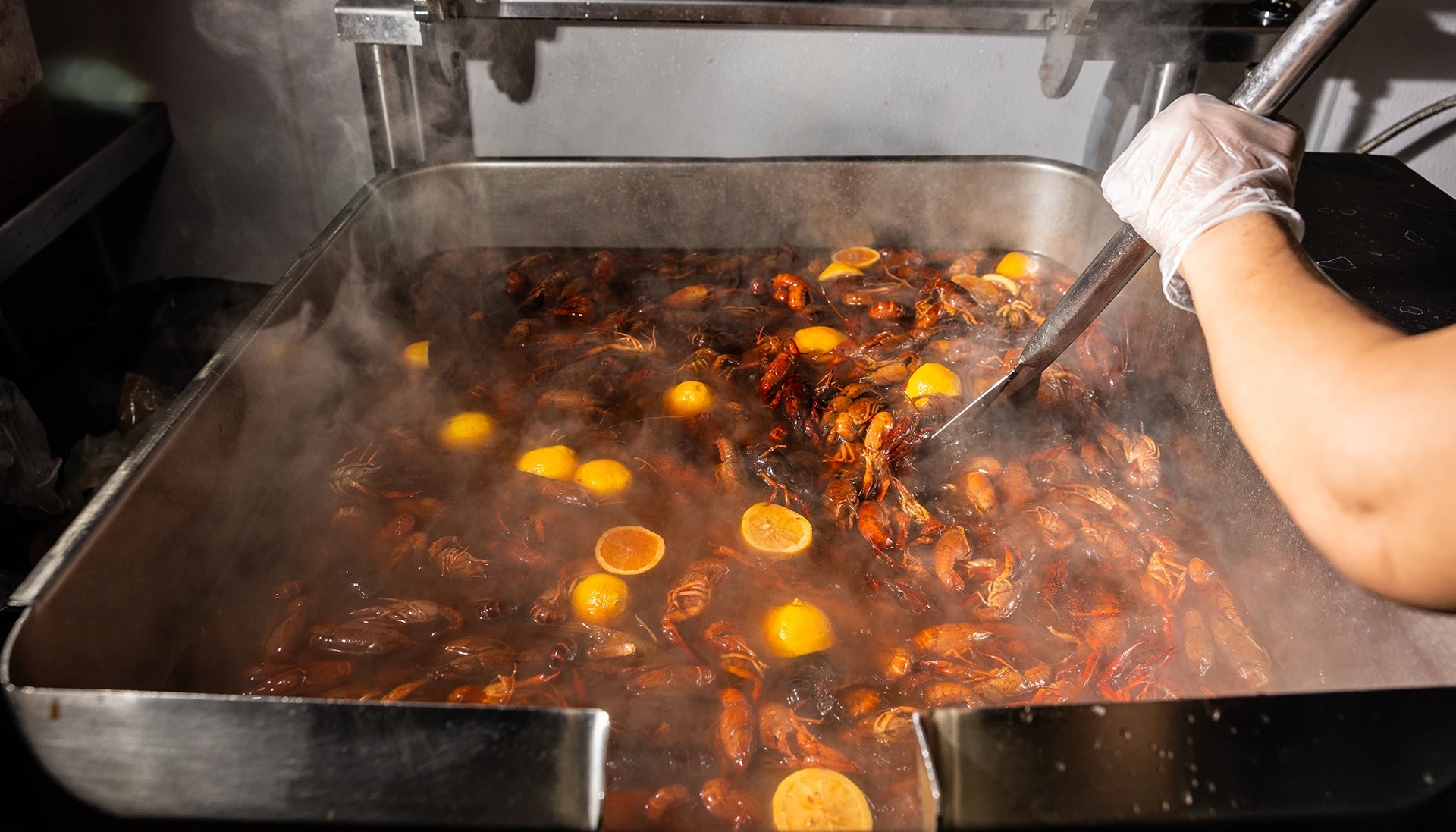
Cajun cuisine follows the calendar: crawfish in spring, shrimp and crabs abundant in warmer months, and oysters peaking in colder water. That seasonal rhythm compels cooks in a Cajun restaurant and home kitchens alike to preserve, pickle, smoke, or otherwise transform fresh catches so nothing goes to waste.
Chefs and fishers learn to read tides and weather because freshness affects both flavor and safety quickly. Salt, spice, and roux are adjusted to suit each haul, with a light sauté highlighting sweet shrimp and a dark roux steadying a winter gumbo.
Ultimately, seasonality and seafood make Cajun cooking practical, local, and endlessly inventive.
How to Recognize Authentic Cajun at Restaurants and Markets
Recognizing authentic Cajun cuisine at a restaurant or market requires attention to technique, ingredients, and provenance. Dishes built on a dark roux, flavored with whole file or bay leaves, and served with rice cooked alongside proteins demonstrate traditional Cajun food rather than relying on fancy reductions or cream.
Asking about the source of seafood, pork, and game reveals whether a Cajun restaurant uses local, seasonal catch and backyard hog. Cooking methods such as simmered stews, smothered meats, and wood- or gas-grilled seafood reflect established Cajun techniques.
Menus that list boudin, cracklins, and gravy-heavy plates, and markets that sell fresh crab, shrimp, and whole fish instead of only fillets, indicate a strong connection to Cajun culinary tradition. Talking with the cook or vendor about recipes handed down through families often shows respect for seasonality and simple technique, which is a hallmark of authentic Cajun cuisine.