The Social Side of Cajun Dining
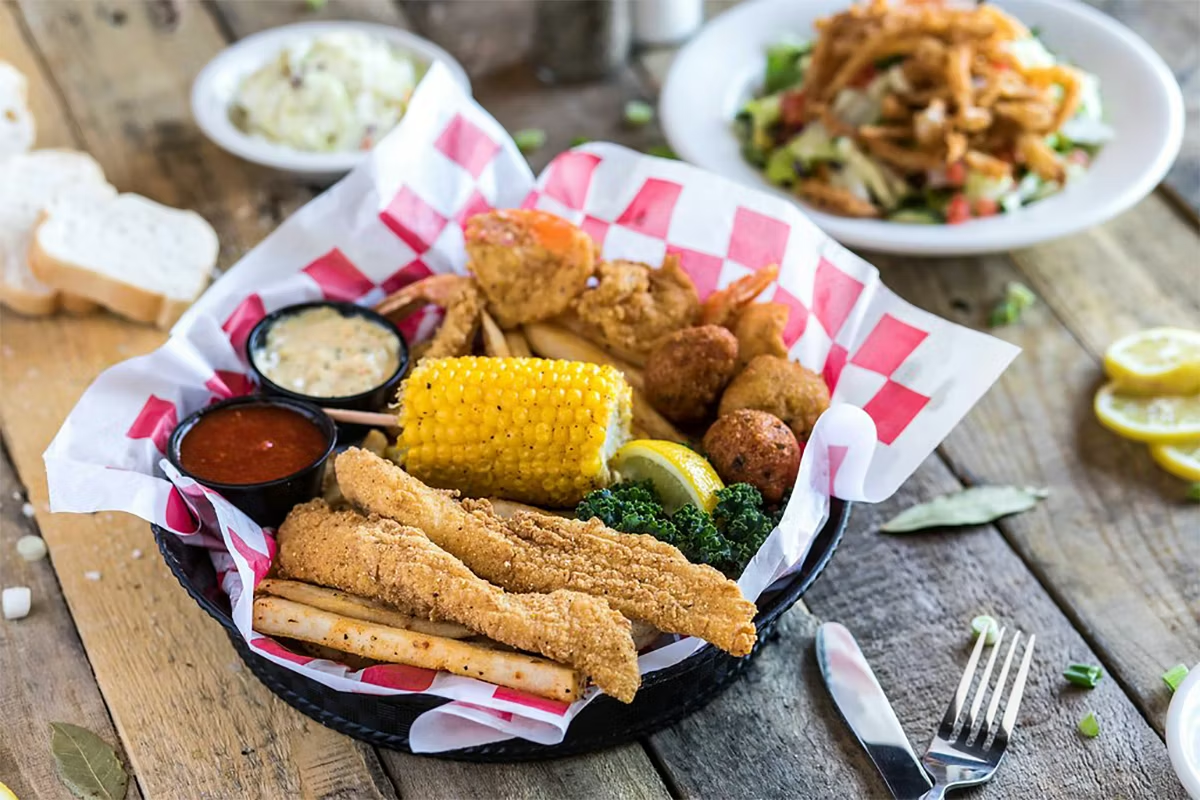
When you sit at a Cajun table, you step into a conversation shaped by simmering pots, skillful hands, and lively music. Elders teach the secrets of a dark roux while neighbors swap news over strong coffee and plates of seafood gumbo. Meals are both work and welcome, as people pass platters of jambalaya and crab boils, chip in to help, and linger until stories settle. There is a rhythm to Cajun cuisine that you can feel, and it does more than fill plates because it makes a place where people belong. Even at Razzoo’s Cajun Cafe, that same social spirit of Cajun food brings people together around shared flavors and shared stories.
How Cajun Meals Build Community
Around a bubbling pot of gumbo or beside a long table piled with boudin, Cajun meals pull people together and make diners feel like part of something bigger.
People step in and instantly share work and stories as they prep, stir, season, and pass plates in a lively, communal rhythm. Hands-on cooking gives each person a role and lets them contribute tangibly to the group’s comfort and enjoyment of Cajun cuisine.
Conversation flows easily because everyone is invested in the same taste and time, and neighbors, family, and newcomers trade jokes, memories, and recipes while enjoying seafood and other local specialties.
Meals mark both occasions and everyday life, creating rituals that anchor relationships and connect people across generations. Guests learn social norms through seating, serving order, and toasts, which together reinforce respect and belonging in the room.
Foodways as Social Glue: Roux, Rice, Trinity
Pulling together roux, rice, and the trinity—onion, bell pepper, and celery—does more than flavor a dish; it knits people into a shared practice. Elders teach technique as they stir roux until it smells nutty, and learners watch the color change while hearing small corrections.
Family members pass bowls of rice and spoon the sautéed trinity into pots as they trade memories about heat, timing, and long afternoons in a Cajun kitchen. Those actions teach patience, preserve memory, and foster respect for sequence.
Recipes become shorthand for family stories and regional identity, and recreating Cajun cuisine reconnects cooks with the people who taught them. Even simple tasks create roles in a bustling Cajun restaurant or a home seafood boil: one person tends the roux, another watches the rice, someone chops the trinity, and conversation fills the pauses between steps.
Crawfish Boils & Boucherie: Community Events
Those same shared kitchens spill out into bigger gatherings where food becomes a public ritual, and Cajun food takes center stage at crawfish boils and boucherie as cooking becomes a communal performance.
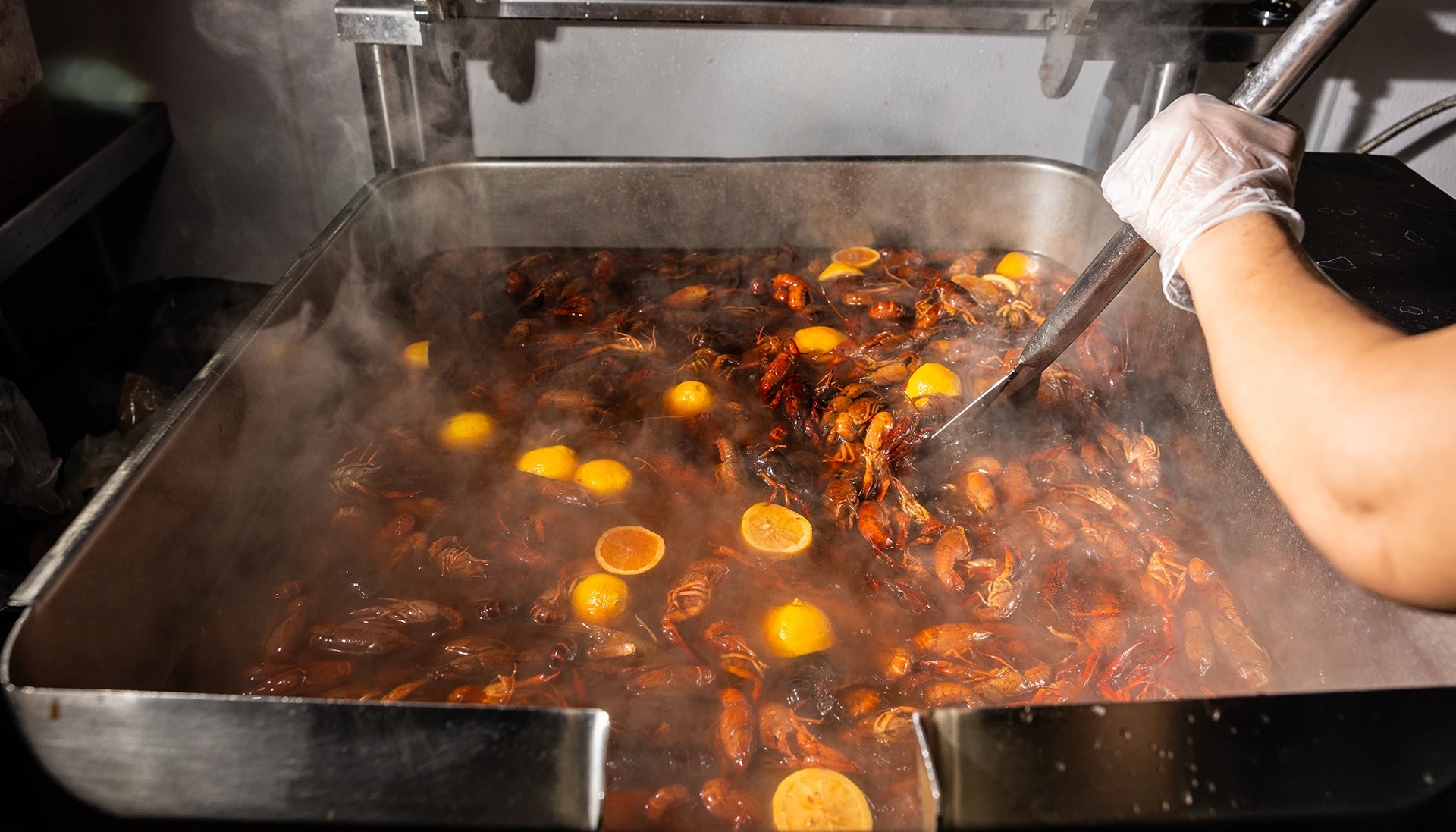
You step into a circle of folding tables and hissing pots, and people peel, season, and talk while steam carries stories. At a crawfish boil you dunk mesh sacks of crustaceans, corn, and potatoes, then dump them on butcher paper so everyone digs in with their hands amid laughter and salt.
At a boucherie you watch neighbors divide tasks such as slaughtering, butchering, curing, and preserving. Roles pass between generations, teaching skills and local ethics that shape how Cajun cuisine and seafood traditions are practiced.
Both events reinforce reciprocity, because people bring supplies or labor and leave with food, bonds, and the sense that community depends on shared work.
Cajun Table Practices That Keep Conversation Flowing
Settle in and you’ll notice that the table itself is designed to keep conversation moving.
Dishes are passed around and stories are invited, so silence rarely lands for long. You reach for shared platters of Cajun food, trade recipes for gumbo and jambalaya, and hand down simple rituals that prompt questions and laughter.
Conversational cues appear in how Cajun cuisine is served, since small bites encourage back-and-forth and communal bowls invite reaching together. Everyone is encouraged to comment on spice, texture, or memory when a pot of seafood boils or a steaming plate of étouffée arrives.
Hosts steer gently by asking about family ties or recent events to draw quieter guests into the conversation. Guests chip in with teasing or encouragement to keep pace without dominating.
Music, Stories, and Dining Rituals
As plates circulate and stories begin, music and ritual slip naturally into the meal and shape how people eat and what they say. You tap your toes to a fiddler’s bow or a guitarist’s steady beat, and those rhythms set the pace for laughter, speech, and even who speaks next. Diners pass bowls of Cajun cuisine and pitchers of iced tea with a practiced cadence learned from kin, while gestures and brief blessings keep hands busy as conversation moves.
Someone tells a tall tale between bites of spicy seafood gumbo, and everyone leans in as the music cushions the pauses so no one feels pressured to fill silence. You learn names, histories, and jokes through this woven performance, and you leave the Cajun restaurant feeling both full and more connected than when you arrived.
How Local Cafés Anchor Neighborhood Life
A local café often functions like the neighborhood’s living room, where regulars occupy their usual seats, baristas know names and orders, and conversations ripple from politics to school recitals.
When you step in, you feel the rhythm of morning commuters swapping quick updates, midday seniors lingering over thick coffee, and students sketching or studying.
The familiar dishes on the menu, sometimes replaced by nearby Cajun cuisine or seafood specials at a neighboring Cajun restaurant, help tie people to place.
Bulletin boards display notices for yard sales, lost pets, and upcoming crawfish boils, and they also carry flyers for local Cajun food nights and community gatherings.
You overhear job leads and childcare offers, and neighbors broker favors and forge plans.
Events such as trivia nights or piano corners turn strangers into acquaintances, and the steady hub of the café fosters everyday interactions that build trust, coordinate support, and keep communal life practical and warm through a dependable presence.
Passing Recipes and Roles Across Generations
When elders pull you into the kitchen, they do more than hand over a recipe card; they pass down stories, temperaments, and an attitude toward work that no written list can capture. You learn timing by watching hands instead of clocks, and you feel when okra is ready by touch and sound. They correct your stirring, teach you to humble the roux, and insist that you honor ingredients rather than merely follow instructions.
Roles move with purpose in a Cajun kitchen: someone mans the pot, another tends the fire, and a youngster peels and listens. You inherit respect for rhythm and for shared labor as much as for flavor. Over the years you take on responsibilities that shape family identity through Cajun cuisine, seafood dishes, and steady participation in communal life.
How Visitors Should Join and Respect Meals
Although you may be a guest, step into a Cajun meal as if you’re joining a lively conversation by listening first, offering help, and following the lead of the host. You should arrive on time and bring a small token when invited to a gathering centered on Cajun food, and you should wait to be seated before taking a place at the table.
Observe seating and serving order since elder family members often go first at a Cajun restaurant or a home-cooked feast, and accept portions graciously when they’re offered. Taste the Cajun cuisine that’s served because declining without a brief compliment can come across as rude.
Engage in friendly, low-volume conversation about the food, local customs, or shared memories while avoiding controversial topics that could sour the mood. If you’re asked to participate by stirring a pot, peeling shrimp, or passing plates, you should do so willingly as a way of showing respect.
When you’re leaving, thank the host sincerely and offer to help clean up as a final gesture that honors the meal and its makers.
Hosting a Cajun-Style Communal Dinner
If you’re hosting a Cajun-style communal dinner, plan for a relaxed, hands-on evening where Cajun cuisine, music, and conversation flow together.
Invite guests to arrive a little early so they can help with simple tasks such as shucking corn, stirring a pot, or arranging plates and thereby feel invested in the meal.
Serve hearty, shareable dishes like gumbo, jambalaya, or a crawfish boil on newspaper-covered tables and provide communal serving utensils along with plenty of napkins.
Set a casual seating plan that encourages mixing, and play upbeat zydeco or brass tunes at a comfortable volume to complement the food.
Encourage toasts, storytelling, and a slow pacing of courses to let the atmosphere develop naturally.
Finish with a light dessert and coffee and allow time for guests to linger as the goal is connection rather than perfection.
Quick Takeaways: Bringing Cajun Hospitality Home
You can bring Cajun hospitality home by focusing on a few simple habits that make guests feel welcome and comfortable.
Greeting people warmly sets the tone for an evening centered on Cajun food and conviviality.
Serving shareable, flavorful dishes inspired by Cajun cuisine encourages communal dining and relaxed conversation.
Keeping the music lively but not loud preserves the energy of a Cajun restaurant without drowning out stories and laughter.
Preparing sauces, sides, or a gumbo base ahead of time allows you to spend more moments with guests than over the stove.
Placing a platter or pot of seafood or other Cajun dishes in the center of the table invites everyone to help themselves.
Providing plenty of napkins and finger bowls keeps the meal enjoyable and practical.
Letting conversation lead and avoiding rigid schedules fosters the unhurried, generous spirit associated with Cajun hospitality.
Using candles, string lights, or a small speaker creates a warm ambience that complements the food and company.
Inviting guests to contribute simple dishes or beverages adds to the communal feel and showcases the variety of Cajun cuisine.
Keeping an attitude that’s generous and unhurried helps ensure that everyone feels seen, fed, and truly welcome.